![logo transparent 2.png]](https://support.readsidebyside.com/hs-fs/hubfs/logo%20transparent%202.png?width=100&height=50&name=logo%20transparent%202.png)
⭐Instructional Goals
- Teach students to be thoughtful, joyful, and capable readers.
- Increase stamina, fluency, and comprehension through authentic literature.
- Foster a classroom community and culture of readers who are motivated to read and joyfully talk about books.
📚Core Design Principals of the Program
1. Complex Texts and Chapter Books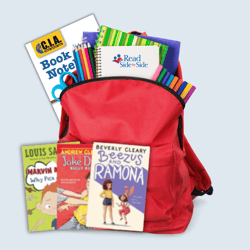
- The program uses high-quality trade books (not leveled-readers).
- Texts are chosen for their depth, literary merit, and emotional resonance.
- Each unit pairs the novel with nonfiction companion texts to strengthen background knowledge and increase cross-text analysis.
2. Novel Studies to Increase Independence
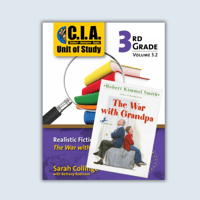
- Each unit in the program follows a three-part structure
1. Read-Aloud: explicit instruction, modeling, and guided practice using grade-level texts.
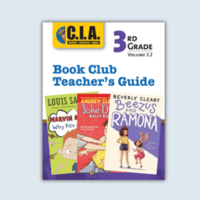
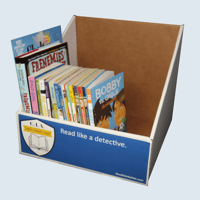
2. Book Clubs: differentiated practice as students are matched to texts that are below, on, and above-grade level. Classroom libraries extend independent reading beyond the classroom!
3. Writing: students write in response to reading and practice both on-demand and process writing.
3. Attention to Text Structure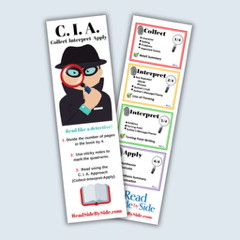
- Each novel is broken into four parts and students are taught to follow a predictable routine to increase their understanding of the text.
Part 1: Collect Critical Information - focus on the key ideas and details in the text including characters, setting, problems, and important events.
Part 2 and 3: Interpret the Text - analyze patterns, make inferences, discover themes, and cite evidence.
Part 4: Apply the Text - synthesize themes, integrate knowledge, and write in response to reading.
4. Explicit Strategy Instruction
- Monitoring Comprehension
- Determining Importance
- Inferring
- Analyzing the Characters' Arc
- Analyzing the Author's Craft and Purpose
- Citing Evidence to Support the Central Theme
- Summarizing and Reflecting
5. Aligned with Standards and the Science of Reading
- Fully aligned to the Common Core and Next Generation Standards for reading literature and informational text.
- Emphasizes close reading, text-based discussion, and writing in response to reading.
- Built on the research of the science of reading to increase students' reading success.
- Proven results!
📚 Program Components
- Teacher's Guides (detailed lesson plans for each novel)
- Novels (authentic literature) and nonfiction
- Nonfiction companion texts (downloadable)
- Vocabulary and word study lessons
- Student materials
- Assessments
- Writing units
We recommend supplementing the program with a grammar and spelling program published by Zaner-Bloser called GUM: Grammar, Usage, and Mechanics.
👍Watch engagement soar as your students master grade-level standards and develop lifelong reading habits!
Not sure if the program is right for you?
Connect with an advisor!
🐶 PreK-2 Program Partner: The Superkids Reading Program, published by Zaner-Bloser.
Learn more about The Superkids Reading Program